

What is Yoshiaki Tsutsumi's net worth?
Yoshiaki Tsutsumi is a Japanese businessman who has a net worth of $500 million.
Yoshiaki Tsutsumi is one of the most extreme boom-and-bust figures in modern business history. For much of the late 1980s, Tsutsumi was widely regarded as both the richest person in Japan and the richest person in the world, presiding over a sprawling Japanese conglomerate so vast that it was nicknamed the "Seibu Kingdom." As the steward of the Seibu Group, he controlled railways, hotels, resorts, department stores, golf courses, ski mountains, and enormous tracts of real estate. At the peak of Japan's asset bubble, his holdings were so extensive that Seibu-related properties accounted for an estimated one-sixth of all land in Japan. In 1987, his personal fortune was pegged at roughly $20 billion, a figure that translates to around $45 billion in today's dollars and briefly put him ahead of contemporaries like Bill Gates and Warren Buffett.
Tsutsumi's rise was built on scale, leverage, and an unusually closed system of corporate control. His empire functioned as a self-contained ecosystem in which customers could ride Seibu trains to Seibu-owned hotels, shopping centers, or resorts without ever engaging with a competing company. That same concentration of power, however, became his undoing. When Japan's bubble economy collapsed in the early 1990s, Tsutsumi responded not with reform or transparency, but with secrecy and manipulation. The choices he made in the years that followed erased roughly 95% of his wealth and ultimately sent him to prison, transforming the world's richest man into a cautionary tale.
Early Life and Family Background
Yoshiaki Tsutsumi was born into one of Japan's most influential business families. His father, Yasujiro Tsutsumi, was a real estate magnate who laid the foundations of what would become the Seibu Group. Yasujiro built his fortune by aggressively acquiring land and developing railways and commercial properties in the decades following World War II, a period when Japan was rapidly urbanizing.
In 1964, at the age of 30, Yoshiaki inherited control of the family empire. Unlike many heirs who struggle to expand beyond their parents' success, Tsutsumi proved both ambitious and decisive. He moved quickly to consolidate assets, expand geographically, and knit together disparate businesses into a single, tightly controlled corporate web.
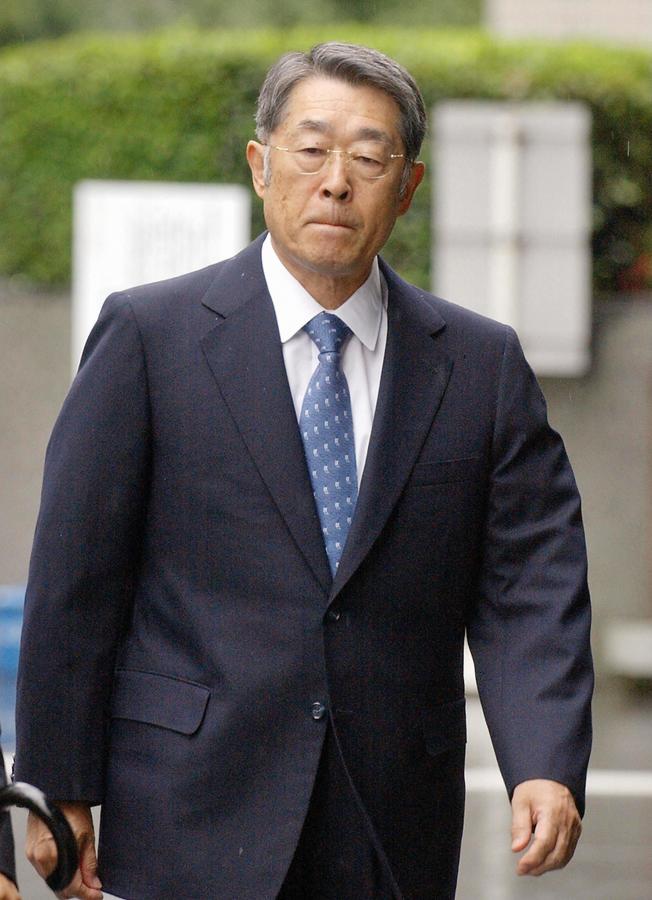
STR/AFP via Getty Images
Building the Seibu Kingdom
Under Tsutsumi's leadership, the Seibu Group grew into one of the most powerful conglomerates in Japan. Its core businesses included railways, real estate development, hotels, leisure properties, and retail. At its height, the group controlled more than 80 hotels, 52 golf courses, dozens of ski resorts, and a major private railway network. It also owned a professional baseball team and maintained international resort holdings outside Japan.
What set Seibu apart was how completely integrated it became. In many regions, Seibu was not just a landlord or an employer but the economic backbone of entire towns. In at least one municipality, a quarter of all residents worked for Seibu-affiliated companies. The group's reach extended beyond commerce into local politics, where its influence was widely acknowledged and quietly feared.
The World's Richest Man
The mid-to-late 1980s marked the absolute peak of Tsutsumi's power. Japan's asset bubble sent land values soaring to surreal levels, and few people owned more land than Tsutsumi. In 1987, his estimated net worth reached $20 billion, making him the richest individual in the world for several consecutive years. Media outlets marveled at the sheer scale of his holdings, while critics began referring to him as "the dictator who owned a sixth of Japan."
During this period, Seibu employed roughly 35,000 people across more than 70 companies. Tsutsumi even played a role in promoting Japan's global profile, including involvement in the development and infrastructure surrounding the 1998 Winter Olympics in Nagano. From the outside, the Seibu Kingdom looked invincible.
Power, Control, and Secrecy
Tsutsumi's management style was famously autocratic. Decision-making was centralized, financial disclosures were minimal, and loyalty was valued over dissent. Employees were expected to follow corporate directives not only at work but, at times, in civic life as well. Reports later emerged that Seibu staff were driven to polling stations to support candidates favored by the company.
This culture of opacity was sustainable only as long as asset prices continued rising. When Japan's bubble burst in the early 1990s, land values collapsed, debt loads became crushing, and the weaknesses in Seibu's balance sheet were suddenly exposed.
The Collapse of an Empire
By the mid-1990s, Tsutsumi's fortune had already fallen dramatically, dropping from $20 billion to roughly $8.5 billion. Rather than restructuring transparently or reducing leverage, he chose to conceal losses and misrepresent financial results. As Japan entered a prolonged period of economic stagnation, the Seibu Group's debt-heavy model became increasingly untenable.
The reckoning came in 2005, when Tsutsumi was arrested on charges of securities fraud and making false financial statements. He pleaded guilty and was sentenced to 30 months in prison. The fall was staggering. The man once seen as untouchable had become a convicted criminal, disgraced in the very society that once revered him.
Aftermath and Legacy
By the early 2000s, Tsutsumi had lost roughly 75% of his peak wealth. By the mid-2010s, losses approached 95%. He eventually agreed to a settlement reportedly worth around $200 million with his own company. Seibu was restructured and emerged as a publicly traded, far more transparent entity, but it bore little resemblance to the empire Tsutsumi once ruled.
In hindsight, Tsutsumi is often described as a visionary who anticipated ecosystem-style business models decades before they became fashionable in Silicon Valley. His downfall, however, illustrates the dangers of unchecked power, excessive leverage, and resistance to transparency. Unlike other Japanese tycoons who survived catastrophic losses by reforming governance and adapting to new realities, Tsutsumi never truly recovered. His rise and fall remain one of the most dramatic financial stories of the modern era, a textbook example of how absolute control can turn historic success into historic collapse.
Read more: Yoshiaki Tsutsumi Net Worth


0 Comments