

What is Kirk Ferentz's net worth and salary?
Kirk Ferentz is an American football coach and former college football player who has a net worth of $50 million. Kirk Ferentz built one of the longest and most stable coaching tenures in modern college football, spending more than two decades as the head coach of the Iowa Hawkeyes and becoming synonymous with the program's identity. Known for his steady leadership, fundamentals-driven philosophy, and a developmental approach that turned overlooked recruits into reliable contributors, Ferentz transformed Iowa into a perennial Big Ten contender. Under his guidance, the Hawkeyes earned multiple top-10 finishes, two Big Ten West titles, an Orange Bowl victory, and consistent bowl appearances spanning more than twenty seasons. Ferentz survived the shifts of conference realignment, NIL upheaval, and multiple internal controversies while maintaining a reputation as college football's ultimate long-term builder. By the time he left Iowa, he had become the longest-tenured head coach in the FBS and the winningest coach in school history.
Early Life
Kirk James Ferentz was born in Royal Oak, Michigan, and raised in a working-class household that valued discipline and consistency, traits that later defined his coaching philosophy. He played linebacker at the University of Connecticut from 1974 to 1976, where he also began developing an interest in teaching and player development. Immediately after graduating, Ferentz shifted into coaching, starting as a graduate assistant at UConn before joining the staff at Worcester Academy. His early roles built a foundation in fundamentals, organization, and line play, qualities that would anchor his approach throughout his career.
In 1981, Ferentz joined Hayden Fry's staff at Iowa as the offensive line coach. Over the next decade he became an important part of Fry's program, helping the Hawkeyes build a consistent, physical identity. His success at Iowa led to his first head coaching opportunity at the University of Maine in 1990, where he spent three seasons before moving to the NFL. From 1994 to 1998, Ferentz served as the offensive line coach for the Cleveland Browns and Baltimore Ravens under head coach Bill Belichick, gaining a deeper understanding of professional-level scheme design and personnel management.
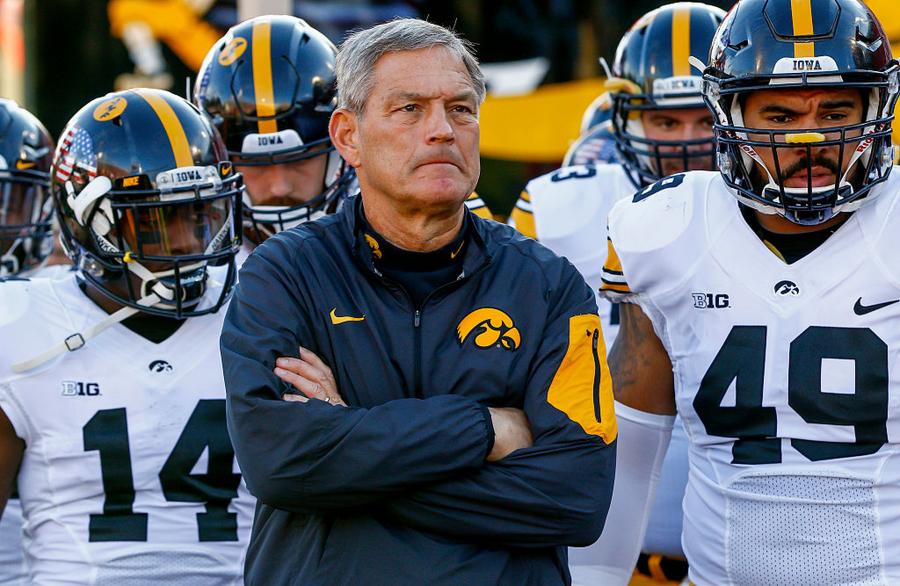
(Michael Hickey/Getty Images)
Coaching Career
Iowa hired Ferentz as its head coach in 1998, selecting him as Hayden Fry's successor. His first two seasons were challenging, but the program turned a corner quickly. By 2002, Ferentz led Iowa to an 11-2 season, a No. 8 national ranking, and a share of the Big Ten title. He followed that with another Big Ten championship in 2004 and an Orange Bowl victory in 2009, establishing Iowa as one of the most consistent and fundamentally sound programs in the country.
Ferentz's teams became known for physical offensive lines, disciplined defensive units, and a developmental pipeline that regularly produced NFL-caliber linemen, tight ends, and defensive backs. Iowa routinely outperformed its recruiting rankings, a testament to Ferentz's emphasis on technique and incremental improvement.
The Hawkeyes posted several standout seasons during his tenure, including a 12-2 campaign and Rose Bowl appearance in 2015, and a 10-win regular season and Big Ten West title in 2021. Ferentz consistently guided Iowa to bowl games and national rankings, often exceeding expectations with a methodical, stability-first approach.
His later years included challenges, including sluggish offensive production and public criticism of his son, offensive coordinator Brian Ferentz. Despite the pressure, Kirk maintained support from Iowa's administration for many years, though shifting dynamics in college football and internal pressure eventually led to his departure. When he stepped down, Ferentz held the record as the longest-tenured head coach in the FBS and the winningest coach in Iowa history.
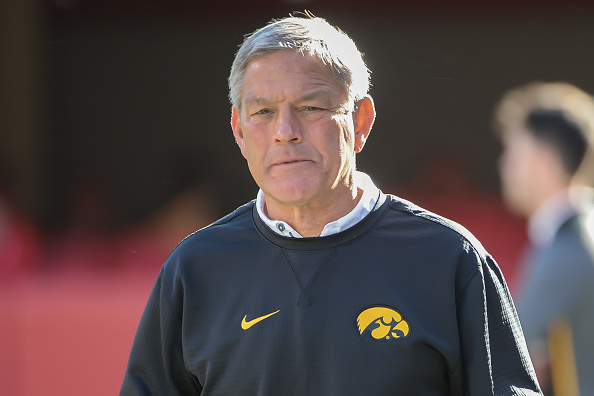
Getty Images
Contracts, Salaries & Career Earnings
Kirk Ferentz's long tenure at the University of Iowa was marked by significant compensation, reflecting his status as one of college football's most tenured head coaches. His contracts consistently included a relatively small base salary supplemented by substantial compensation and longevity bonuses, with his total annual compensation reaching $7 million. This contract, signed after the 2021 season and extending through 2029, included a $500,000 base salary, $5.5 million in supplemental compensation, and a $1 million longevity bonus.
Beyond his cumulative salary, Ferentz's contracts have included a substantial buyout clause, which was reported to be $48 million. Based on publicly available salary records for the years 1999 through 2024, Ferentz's total earnings during his time at Iowa amount to approximately $84.5 million in total compensation, and when factoring in the $48 million potential buyout, his contracts represent a career financial value of over $132 million.
- 1999: $160,289.83
- 2000: $541,732.97
- 2001: $427,138.70
- 2002: $592,925.25
- 2003: $1,950,499.55
- 2004: $1,706,300.04
- 2005: $2,085,950.00
- 2006: $3,174,999.96
- 2007: $2,765,000.00
- 2008: $2,870,000.00
- 2009: $3,070,000.00
- 2010: $3,295,000.00
- 2011: $3,862,369.96
- 2012: $3,725,000.00
- 2013: $3,775,000.00
- 2014: $3,825,000.00
- 2015: $3,950,000.00
- 2016: $4,825,000.00
- 2017: $5,075,000.00
- 2018: $5,000,000.04
- 2019: $5,500,000.04
- 2020: $5,566,666.70
- 2021: $5,166,667.00
- 2022: $6,898,710.00
- 2023: $7,056,731.00
- 2024: $7,427,692.00
Total Reported Compensation (1999-2024): ∼$84,519,573
Reported Buyout Value (as of July 2022): $48,000,000
Total Career Financial Value (Salary + Buyout): ∼$132,519,573
Legacy at Iowa
Kirk Ferentz's legacy is defined by stability, development, and the ability to maximize talent within a system built on fundamentals. He turned Iowa into a model of consistency, regularly producing NFL players and fielding teams that were technically sound, resilient, and competitive in the toughest environments. Though his later years brought scrutiny and offensive frustrations, his overall impact remains profound. Few coaches in modern college football matched his combination of longevity, reliability, and program-building success.
Read more: Kirk Ferentz Net Worth


0 Comments