

It's been 25 years since Charles Schulz passed away, but the world he created—a round-headed boy, a mischievous beagle, and a gang of lovable misfits—has never been more alive. The Peanuts gang has appeared in nearly every corner of global culture: on cereal boxes and sneakers, in MetLife commercials and Apple TV+ shows, on backpacks in Japan and roller coasters in California. What began as a quiet, four-panel comic strip in 1950 has ballooned into a multi-billion-dollar empire—one of the most enduring and profitable intellectual properties of all time.
Schulz earned hundreds of millions of dollars from his creation during his lifetime. And that was just the beginning. Since his death in 2000, Schulz's estate has earned well over $1 billion from licensing fees, merchandising royalties, syndication deals, and animated content partnerships. In a typical year, Schulz's heirs earn more than the combined estates of cultural titans like John Lennon, Jimi Hendrix, and Elizabeth Taylor.
And deals keep happening! Today, it was revealed that Sony had paid $475 million to acquire a larger percentage of the rights to the Peanuts franchise. Sony already had a 39% stake. After this latest deal, it will own 80%. The remaining 20% continues to be owned by Shulz's children.
How did all of this happen? How did a shy cartoonist from Minnesota build an empire from a few scribbled children and a dog with dreams of grandeur? How has his creation continued to mint money a quarter-century after his passing? This is the story of how Peanuts became one of the most powerful posthumous brands on the planet, and how Charles Schulz became one of the richest dead celebrities of all time.
From St. Paul to the Funny Pages
Charles Monroe Schulz was born in 1922 in Minneapolis, Minnesota. Like his future character, Charlie Brown, his father was a barber, his mother a homemaker, and his childhood was marked by quiet introspection. As a boy, Schulz was obsessed with drawing—especially Popeye—and by high school, he was submitting cartoons to his school paper and local magazines, though with little success. He skipped two grades in elementary school, which left him younger and socially isolated among his classmates. His grades weren't great, but his ambitions were clear: he wanted to be a cartoonist.
After high school, Schulz enrolled in a correspondence art course and soon found work at a Catholic magazine drawing cartoons of a family with quirky pets. But his plans were interrupted when he was drafted into World War II. He served in Europe with the 20th Armored Division, eventually attaining the rank of staff sergeant. After the war, he returned to Minnesota and resumed his dream of cartooning, picking up freelance work while developing a concept of his own.
In 1949, Schulz began publishing a strip called Li'l Folks in the St. Paul Pioneer Press. A year later, United Feature Syndicate offered to syndicate his work nationally, but the deal came with harsh standard terms of the era: Schulz had to sign over 100% of the rights to the syndicate. He would be an employee, not an owner. They also had one non-negotiable condition: the name had to change. Executives feared Li'l Folks was too close to an existing copyright, so they renamed it Peanuts (after the children's gallery on the Howdy Doody show). Schulz loathed the replacement title, calling it "totally ridiculous" and undignified, but because he didn't own the IP, he had no choice but to accept the deal.
Early Royalties
The very first "Peanuts" cartoon was published on October 2, 1950, a month after Charles turned 28 years old. In its first year of syndication, just seven national papers agreed to run the cartoon. Sigh. The next year, syndication picked up a bit, and Schulz managed to earn $90 a week in royalties, which is equal to around $1,200 a week in today's dollars ($62,000 per year). By 1953, Peanuts was a hit across the country, and Charles was making $30,000 per year, equal to $360,000 today.
A Billion Dollar Cartoon
Within a few decades, the strip was syndicated in over 2,600 newspapers, translated into 21 languages, and read daily by hundreds of millions. But the real fortune came from licensing.
Peanuts became a merchandising juggernaut. Schulz licensed his characters to Hallmark, Mattel, and endless consumer goods. Snoopy appeared in Macy's parades, on lunchboxes, wristwatches, and pajamas. By the 1980s, Schulz was earning an estimated $30 million a year—roughly $95 million today. From 1990 until his death in 2000, he pulled in $40 million annually, equivalent to about $80 million per year in 2025 dollars. At the time, that made him the highest-paid entertainer on the planet.
Perhaps most impressively, Schulz wrote and drew every single Peanuts strip himself—17,897 in total—right up to the end.
When he died of colon cancer on February 12, 2000, at the age of 77, the final strip ran in newspapers the very next day.
In his will, Schulz insisted that no new Peanuts comic strips be drawn after his death—a rare act of artistic control in the world of syndicated comics.
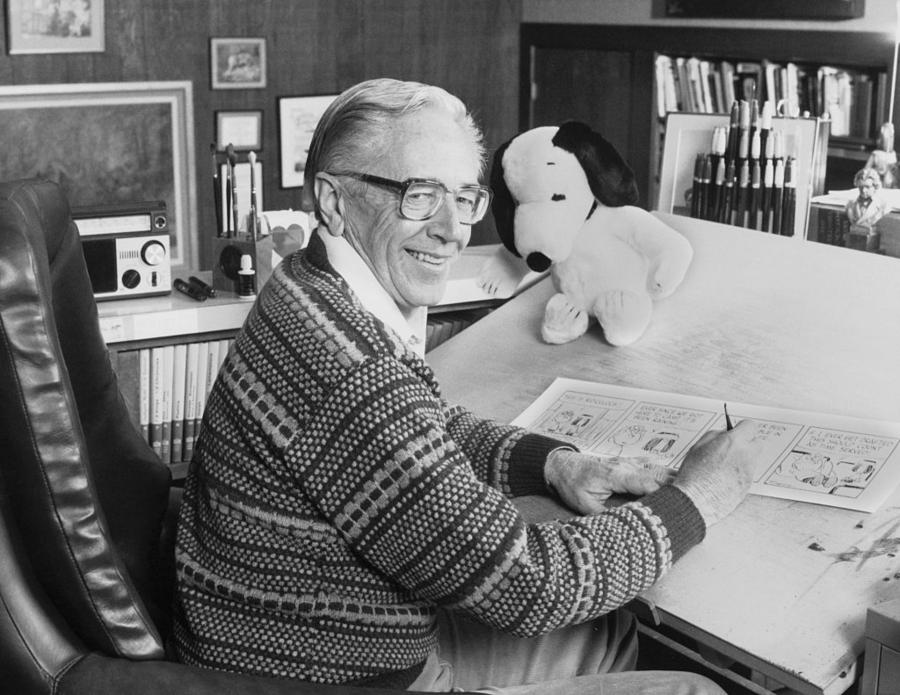
During his lifetime, Charles earned hundreds of millions of dollars from his amazing creation. At the time of his death, Charles Schulz's net worth was $200 million. That's the same as around $375 million in today's dollars. But that was just the beginning…
(via Getty)
The Family Finally Gets 20%
For 60 years, despite Charles Schulz's immense fame and fortune, he was technically an employee. United Feature Syndicate (and its parent company, E.W. Scripps) owned the Peanuts copyright, trademarks, and licensing rights entirely. The Schulz family received fat royalty checks, but they didn't hold the keys to the kingdom.
That changed in 2010. E.W. Scripps, looking to exit the licensing business, put the Peanuts brand up for sale. The Schulz family faced a terrifying possibility: their father's legacy could be sold to a corporate entity that might not respect his vision.
So, the family made a bold move. They partnered with Iconix Brand Group (a licensing company that owned brands like Joe Boxer and Candie's) to buy back the empire their father built. In a deal valued at $175 million, Iconix put up the majority of the cash for an 80% stake, while the Schulz family paid their share to acquire the remaining 20%.
It was a transformative moment. For the first time since 1950, the Schulz family weren't just collecting checks—they were owners. That 20% equity stake gave them a permanent seat at the table, securing their ability to influence the brand's future and leading directly to the massive deals that would follow in the coming decades.
A Posthumous Empire
Between 2001 and 2024, Schulz's estate earned an average of $30–40 million per year. Here's a sampling of the estate's annual earnings:
- 2001–2005: $20M to $35M annually from licensing, syndication, and classic TV specials
- 2010: A pivotal year. United Feature Syndicate, which had distributed Peanuts since 1950, sold the IP to a newly formed joint venture called Peanuts Worldwide LLC. The buyer was a partnership between Iconix Brand Group, which acquired an 80% stake for $175 million, and the Schulz family, which retained 20% ownership, ongoing royalty rights, and final creative approval over how the characters are used.
- 2015: The Peanuts Movie grosses $246M worldwide, sparking a revenue surge to $40M+
- 2016: Schulz's estate hits an all-time high with $48M in earnings
- 2020–2024: Thanks to new Apple TV+ series and specials, the estate earns between $30M and $40M annually
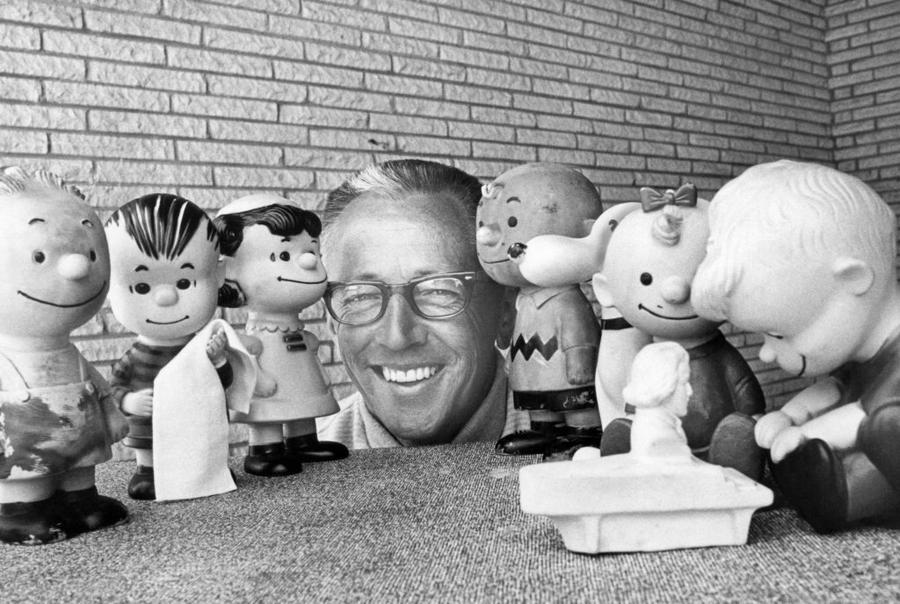
All told, Peanuts has generated over $1 billion after Charles' death. Not all of that goes to Charles' heirs, though…
Schulz in 1966 (Photo by Underwood Archives/Getty Images)
Who Owns Peanuts Today?
As we mentioned earlier, in 2010, United Feature Syndicate sold the Peanuts IP to Iconix Brand Group, which formed a new company called Peanuts Worldwide LLC. Schulz's family co-invested in the deal to finally gain a 20% ownership stake in Peanuts. In 2017, Iconix sold its 80% stake to Canadian media company DHX Media (now called WildBrain) for $345 million.
In 2018, Japanese giant Sony Music Entertainment acquired a 39% stake in Peanuts from WildBrain, resulting in a three-way split between WildBrain (~41%), Sony (~39%), and the Schulz Family (20%).
The structure changed once again just this week. In a deal valued at approximately $457 million, Sony (via Sony Music Entertainment Japan and Sony Pictures Entertainment) just acquired WildBrain's remaining stake, taking majority control of the franchise. This deal consolidated the ownership structure to:
- Sony: 80%
- Schulz Family: 20%
The Schulz family, via their company Charles M. Schulz Creative Associates, will continue to benefit enormously as 20% owners of the franchise. They also hold veto power on certain creative decisions and earn royalties through both ownership and licensing agreements. Schulz's son Craig has been heavily involved in recent Peanuts productions and business decisions.
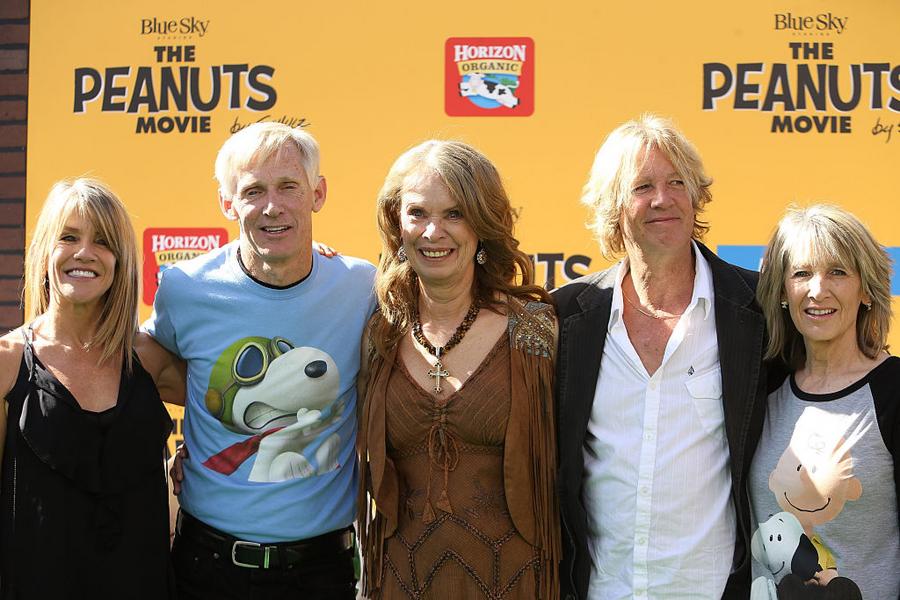
Charles' five children made a red carpet appearance at the 2015 premiere of "The Peanuts Movie." From left to right in the photo below are: Jill, Craig Schulz, Meredith, Monte, and Amy Schulz.
(Photo by Michael Tran/FilmMagic)
Still Drawing Dividends
A quarter-century after his passing, Charles Schulz's empire isn't just surviving—it's preparing for a massive expansion. While new Peanuts shows already stream to millions of Apple TV+ subscribers and merchandise lines shelves from Tokyo to Target, the 2025 Sony acquisition signals a shift into overdrive.
With Sony now controlling 80% of the empire, the "quiet" comic strip is poised to become a multimedia titan on par with Marvel or Nintendo. Sony executives have already signaled plans to leverage their massive global network—spanning film, music, and gaming—to elevate the brand to new heights. Industry insiders expect a ramp-up in feature films from Sony Pictures, potential high-budget animated series, and perhaps even deeper integration into the world of video games and anime, given the brand's massive popularity in Japan. With a new feature film already in production and the Apple TV+ partnership secured through 2030, Snoopy's calendar is fuller than it was when Schulz was still alive.
It's easy to admire Schulz for his artistic discipline—for writing and drawing nearly 18,000 strips by hand, and for refusing to let anyone continue the strip after his death. But it's just as remarkable to recognize the business engine now driving that legacy. The "no ghost artist" rule ensured the original work remained sacred, while the aggressive estate management has ensured the brand remains ubiquitous.
So while Charlie Brown may never win a baseball game, and Lucy may never let him kick that football, Schulz's legacy is anything but a downer. In fact, it's a blockhead-level blowout—a multi-billion-dollar reminder that even in the afterlife, Snoopy still sleeps on top of the doghouse, Woodstock still chirps with joy, and Charles Schulz still earns enough to keep the kite stuck firmly in the money tree.


0 Comments